Changing garage door opener usually starts with checking the door, balance, springs, cables, and power supply. The old unit is then removed, a matching opener is fitted, and every safety feature is tested. The right choice depends on door size, weight, daily use, ceiling space, and needed controls. Professional fitting helps keep access smooth and safe.
A failing opener can leave a home or business hard to use. The door may move slowly, stop halfway, make new sounds, or fail when you need to leave. Arroyo Grande Garage Door Repair helps property owners decide when repair is sensible and when replacement is safer.
Table of Contents
- When should you replace a garage door opener?
- What does changing a garage door opener involve?
- How do you choose the right garage door opener?
- How long does it take to replace a garage door opener?
- What should you expect during a professional opener installation?
- How long does a garage door opener last?
- What should you do after changing a garage door opener?
When should you replace a garage door opener?
A garage door opener may need replacement when it fails often, lacks key safety features, or cannot lift the door well. One clear fault may only need repair. Repeated trouble can point to a worn motor, damaged drive parts, bad wiring, or a unit that no longer fits the door.
Signs the opener is reaching the end of its service life
Some warning signs are easy to spot. The opener may hum without lifting the door, reverse for no clear reason, or work only after several tries. A remote may stop working after a new battery is fitted. A door that opens by itself is a serious security issue and needs quick help.
Other signs include grinding, shaking, a burning smell, and lights that flicker. The unit may also lack rolling-code security, battery backup, or smart control. These features are not needed in every home, but they can make access safer and easier.
A door that has left its tracks has a different fault. Garage Door Off Track Repair may be needed before the opener is checked. Do not use the opener to force a crooked, stuck, or blocked door.
When a repair may be enough instead
Repair may suit an opener that is in sound shape and has one clear problem. A bad remote, loose wire, worn gear, failed sensor, or damaged wall control may not need a new motor. Homeowners can safely clean the photo-eye lenses and check that nothing blocks the door path.
The door itself must also be checked. A weak garage door spring, damaged cable, or poor balance can make a good opener seem faulty. Garage Door Cable Repair should be left to a trained professional because lift cables can hold dangerous force. Arroyo Grande Garage Door Repair helps Arroyo Grande property owners tell an opener fault from a wider door problem.
What does changing a garage door opener involve?
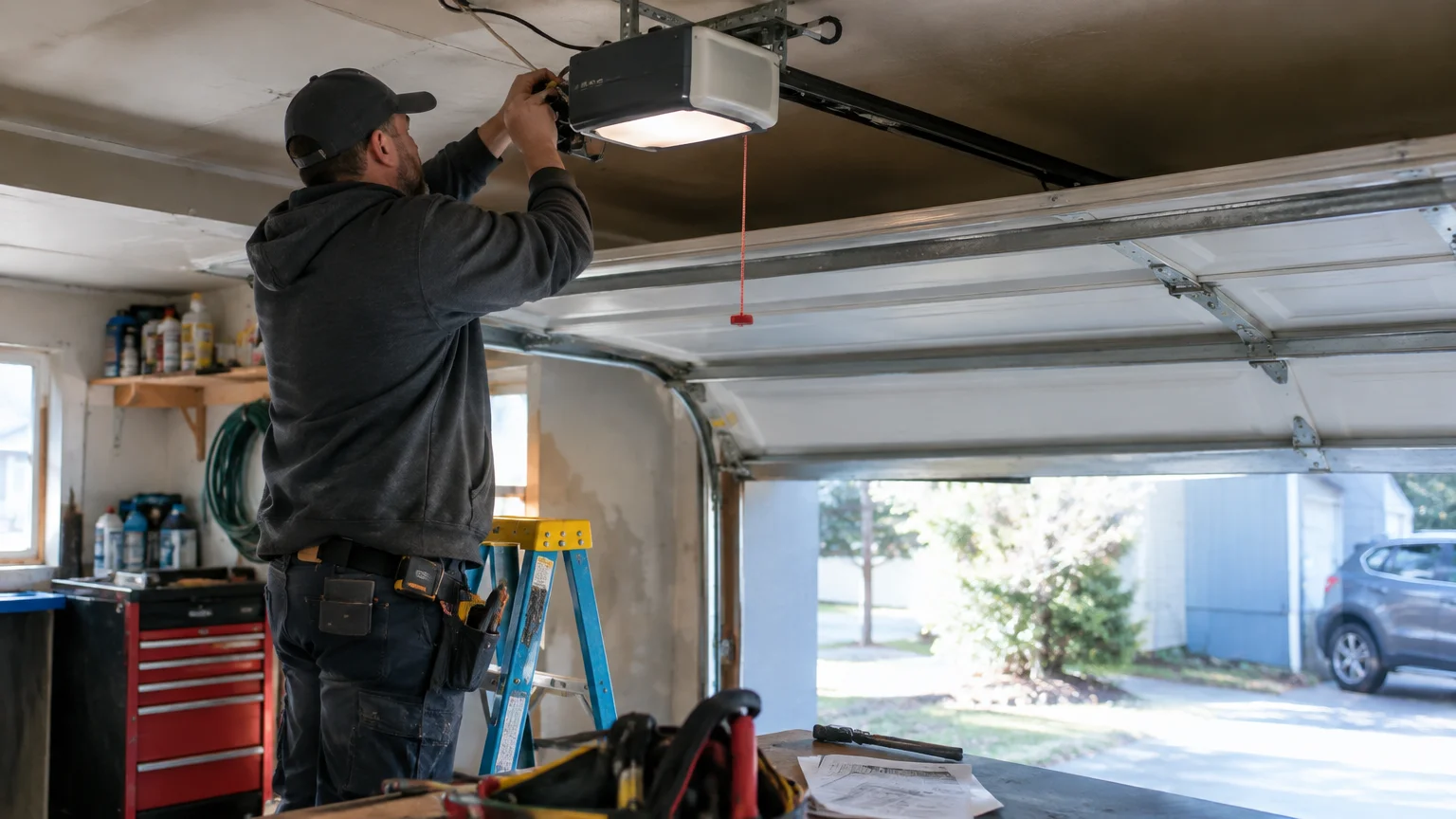
Changing garage door opener involves more than swapping one motor for another. The installer checks the door, support points, wiring, travel path, and safety parts before fitting the new unit. This helps stop a new opener from working against a damaged or badly balanced door.
Removing the existing opener and checking the door system
The old opener is unplugged and separated from the door. The installer then checks the rail, brackets, drive system, hinges, rollers, springs, cables, and bottom brackets. A spring or cable under tension can cause severe harm without the right tools and training.
The door should move freely by hand after it is safely separated from the opener. If it feels very heavy, binds, or drops, the opener is not the main problem. The door needs qualified service before a new motor carries its load.
The ceiling structure is checked as well. A new unit needs a firm mounting point. Drywall alone may not hold it safely. The outlet position and rail path can also change the work needed.
Installing and connecting the new opener
The new opener is fitted to its rail and attached to strong framing. The arm connects to the door, and travel limits are set so the door opens and closes without pushing too far. The work may also need new brackets, wiring, or a wall control.
Safety sensors are aligned near the bottom of the opening. These sensors help stop or reverse the door when something crosses the beam. The installer checks the light, wall button, remotes, keypad, and backup battery when the model has one.
A smart garage door opener may need a home network connection. The owner should use the maker’s official app and a secure account. Arroyo Grande Garage Door Repair can explain the controls in plain terms before leaving the property.
How do you choose the right garage door opener?
The right opener must match the door, building, and owner’s needs. Door size, weight, balance, ceiling height, noise, and power access all matter. Choosing by looks alone can lead to poor lifting, early wear, or a poor fit.
Drive types, lifting capacity, and door compatibility
A chain drive uses a metal chain and is often picked for strength. It may make more sound than other designs. A belt drive uses a strong belt and is often quieter, which may suit a garage below a bedroom or beside a living space.
A screw-drive system uses a threaded rod and may have fewer moving parts. A wall mount garage door opener sits beside the door instead of on the ceiling. It can help when ceiling space is limited, but the door and spring system must suit that design.
The opener must fit the door’s size and weight. A single-car door and a wide custom door may need different lifting power. Insulated doors, solid wood doors, and doors with added hardware can place different demands on the motor.
The opener must also match the spring system and door balance. It should never hide a damaged spring or cable. When the door needs more than opener work, Garage Door Installation or Garage Door Opener Repair may be the better service path.
Safety, security, and smart-home features
Modern openers may have rolling-code security, motion lights, battery backup, and app alerts. Rolling-code security changes the access code after each use. This can make copied signals less useful. Battery backup can help open the door during a power outage when the model supports it.
Smart controls can show if the door is open and let an approved user operate it from a phone. Use strong account protection and remove access for people who no longer need it. Choose features that solve a real need and are easy to use.
How long does it take to replace a garage door opener?
Most standard replacements can be completed during one visit, but the work time depends on the door and site. A simple swap may be quicker than a job needing new supports, wiring, sensors, or door repairs. The installer can give a better time estimate after checking the system.
Factors that affect the installation time
The old opener may come off quickly when its fasteners and wires are sound. Work may take longer if the rail is damaged, the ceiling is hard to reach, or the new model has a different mounting layout. High ceilings, tight storage areas, and poor lighting can also slow safe work.
The door’s condition matters just as much. A bent track, worn roller, weak spring, or damaged cable should not be ignored. A new opener cannot safely fix a door that does not move well on its own.
The chosen features may add setup time. Smart controls need network pairing. A keypad needs a new code. Battery backup, extra remotes, and a wall-mounted design may need added checks.
What may require additional preparation
The installer may need to strengthen the ceiling or add a suitable outlet. Older homes may have wiring that needs review. Clear boxes, tools, vehicles, and stored items from the work area before the visit.
Tell the installer about unusual door behavior. Useful details include when the problem began, whether the door reverses, and whether the opener works from the wall but not the remote. These details help guide the first check.
If the door is stuck, off track, or partly open, do not pull hard on it or disconnect parts under tension. Emergency garage door repair can restore safe access while helping limit more damage.
What should you expect during a professional opener installation?
A professional opener installation should include inspection, fitting, adjustment, and testing. The installer should not only make the motor run. The whole door system should work together, and the owner should understand the main controls before the job ends.
Safety checks and adjustments after fitting
The installer checks door balance, travel path, mounting points, and the attachment arm. Travel limits and force settings are adjusted for the door. These settings help the unit stop at the right points and respond when it meets resistance.
The photo-eye sensors are tested near the floor. The reversing action is checked with a safe test method. The owner should not change force settings without advice because poor settings can create a garage door safety risk.
The installer looks for loose hardware, rubbing parts, unusual shaking, and signs of strain. If the door has a spring or cable issue, work may pause until that hazard is handled. This protects the new opener and the people using the door.
Testing remotes, wall controls, and safety sensors
Each remote should operate the door from a suitable distance. The wall control should start and stop the opener correctly. The keypad should accept its new code and reject a wrong one. Car controls should be paired by following the vehicle and opener instructions.
The owner should learn how to use the manual release. This lets the door move during a power failure when the system allows it. The owner should also know where the opener light, battery, and safety sensors are located.
After changing garage door opener, keep the area clear during testing. Children and pets should not play near the moving door. Garage Door Maintenance can help keep the system clean, secure, and easier to watch over time.
How long does a garage door opener last?
A garage door opener often lasts for many years, but no fixed life fits every home. Use, door weight, balance, moisture, dust, shaking, and installation quality all affect service life. A lightly used opener may last longer than one lifting a heavy door many times each day.
Factors that affect opener lifespan
A balanced door places less strain on the motor and drive system. Worn rollers, tight tracks, or a weak spring make the opener work harder. Repeated stops, jams, and forced use can also wear gears and electronic parts.
Climate and the garage setting matter too. Dust, damp air, heat, and poor airflow may affect the motor and circuit board. A firm mounting system helps reduce shaking and keeps the rail lined up.
The opener’s age is only one part of the choice. A newer unit may help when the old one lacks safety features, has old controls, or needs the same repairs again. Garage Door Opener Repair may help when the fault is limited and the rest of the system is sound.
Maintenance that can help prevent early failure
Homeowners can handle simple upkeep without professional help. Keep the door path clear, clean photo-eye lenses with a soft cloth, replace remote batteries, and watch for new sounds or slow movement. You can also look at visible bolts and brackets without touching springs, cables, or bottom brackets.
Do not adjust torsion springs, extension springs, lift cables, or bottom brackets. These parts can store strong force. A mistake may make the door fall or send metal parts outward at high speed.
A professional can check the system when the door becomes noisy, uneven, or hard to move. Early attention may help prevent a small opener problem from becoming a wider access or security issue in Arroyo Grande.
What should you do after changing a garage door opener?
After changing garage door opener, test every control and learn the basic safety steps. The door should open and close smoothly, stop at the right points, and reverse when the safety system finds an obstruction. Report any odd sound, delay, or movement soon.
Programming remotes, keypads, and connected controls
Program remotes and keypads by using the model’s instructions. Remove old remote codes when ownership changes or a remote is lost. A keypad code should not be easy for a stranger to guess.
For a connected opener, use a private account and review who has access. App alerts can show when the door opens or closes. Keep the app and phone protected with current security settings.
Use the manual release only as directed. Keep the door closed when the garage is unattended. If the opener stops working, check power, the wall control, the remote battery, and sensor alignment. Do not force the door or touch high-tension parts.
Key takeaways for safe and reliable operation
- A new opener must match the door’s size, weight, balance, and support system.
- A repair may be enough when the fault is limited to a remote, sensor, or small part.
- Springs, cables, and bottom brackets need trained service because they store dangerous force.
- Remotes, keypads, safety sensors, and smart controls should all be tested after fitting.
- Clear the door path and arrange Garage Door Maintenance when warning signs return.
Frequently Asked Questions
Can a homeowner replace a garage door opener?
A homeowner can handle simple checks, such as cleaning sensor lenses and replacing remote batteries. Replacing the opener involves mounting, wiring, travel settings, and safety tests. Professional help is safer when the door is heavy, off track, poorly balanced, or connected to springs and cables under tension.
How do you know which garage door opener fits your door?
The opener must match the door’s size, weight, balance, ceiling layout, and use. Drive type also affects noise and mounting. A belt drive may suit a quiet home, while a wall mount may suit a garage with little ceiling space. An installer can check the fit before changing garage door opener.
Is it better to repair or replace an opener?
Repair may be better when the opener is in good shape and has one clear fault. Replacement may make more sense when failures repeat, parts are worn, safety features are missing, or the unit cannot handle the door. The choice should include the door’s springs, cables, tracks, and balance. The final cost is confirmed on a quote after the system is checked.
Can a new opener work with an old garage door?
A new opener can often work with an older door if the door is the right size, balanced, and in sound condition. The opener should not be fitted to a door that binds, falls, or needs too much force. The door may need repair before the new unit is installed.
What happens if a garage door opener stops working after installation?
Check whether the opener has power, whether the remote battery works, and whether anything blocks the safety sensors. Do not force the door or adjust springs and cables. If basic checks do not help, Arroyo Grande Garage Door Repair can inspect the opener and door system in the main Arroyo Grande area, including Fair Oaks, Pacific Estates, Grover Beach, Oceano, San Luis Obispo, Guadalupe, and nearby communities.
Conclusion
Replacing an opener can restore smooth access and improve daily security, but the opener is only one part of the garage door system. Careful product choice, safe fitting, correct testing, and simple upkeep all matter. Arroyo Grande Garage Door Repair helps homeowners and property owners make a clear repair or replacement choice.
Contact us today for urgent help with changing garage door opener and restoring safe, reliable access.