Garage Door Off Track Repair in Arroyo Grande, CA
The fix is to hold the door steady, guide it back into the rails, and hang it on straight track with healthy rollers, while the original cause is corrected so it stays put.
A door in the Arroyo Grande area counts as off track when a roller has jumped the rail, the door sits tilted or jammed, or a panel is bowed where it snagged. Stop using it, and keep the opener switched off.
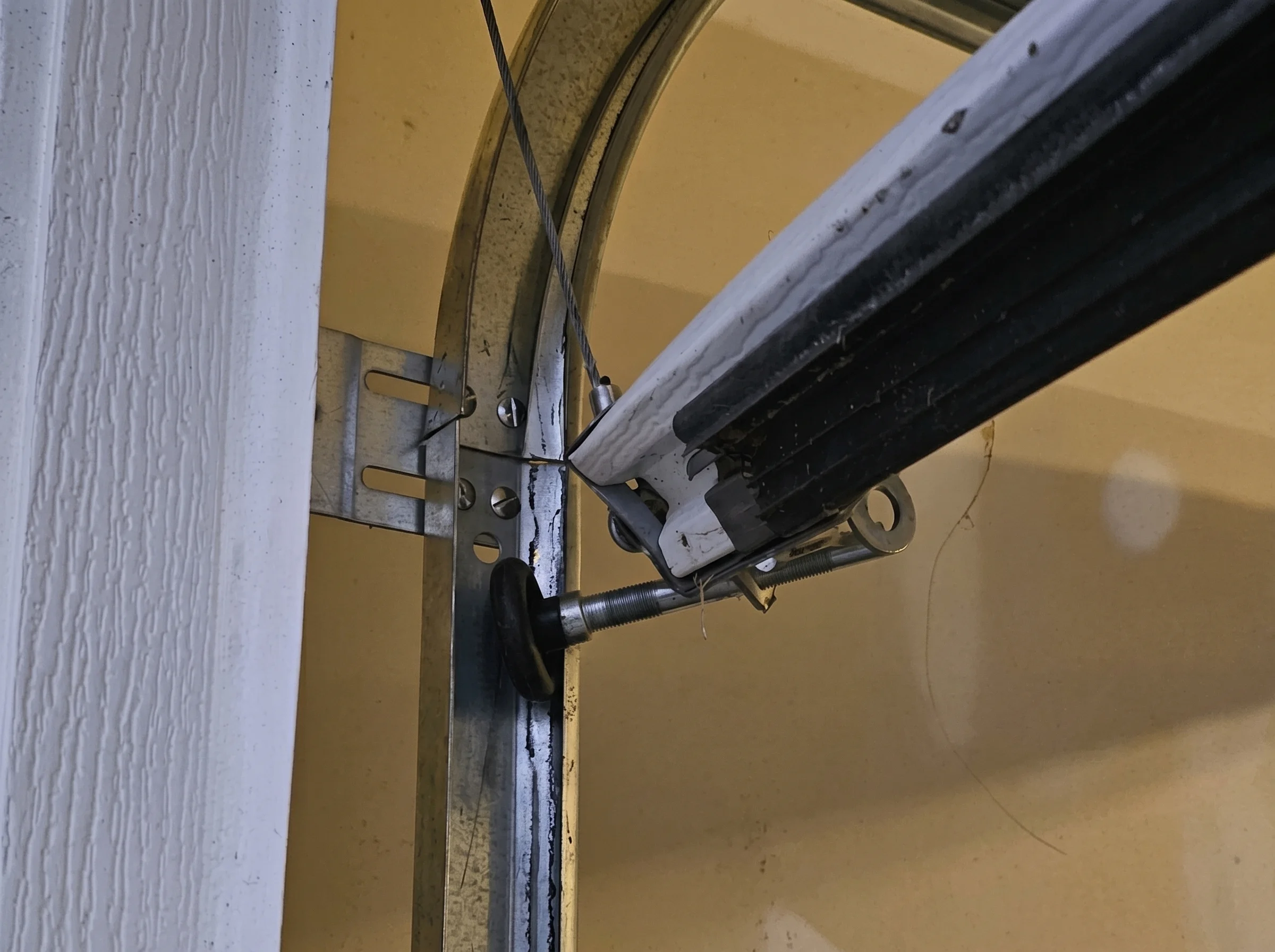
How a derailed door shows itself
One or two wheels sitting beyond the rail, normally down low or at the curve where the track bends over to run along the ceiling of the garage.
A door that leans or wedges, frequently halted midway up.
A kinked or buckled panel, where the motor pressed on against a stuck door.
A rail that is plainly bent, dented, or hanging away from the wall.
Grinding, popping or scraping noises in the run-up to the derailment.
Wheels out of the channel? Hold off on the opener, then say which side let go and how it happened.
Contact UsWhat knocks a door off track
A car strike
Most derailments start with a car reversing into a closed or part-open door, and the lowest length of rail often folds too.
A cable that broke or jumped
The door sags at one end, twists, and the wheels let go. If a cable is the culprit, the cable repair page deals with it.
Tired or cracked rollers
When a bearing locks up, the wheel drags rather than spins and escapes at the first bump along the rail.
Slack or bowed rail
Vibration over the years loosens the brackets holding the rail to the wall, letting the rail drift apart until a wheel falls out.
An obstruction under the door
A bike or bin under a closing door should trigger the reverse that openers made in 1993 or later must have.
Secure the area
Leave the opener off
It keeps driving the door and may crush panels or tear the rail from the wall.
Leave the emergency release alone while the door is partly up and off track; it can crash down or swing fully free of the rail.
Don't force rollers back with a hammer while the door bears weight. Springs still hold tension on a derailed door, which can lurch without warning.
Keep your distance from the door, and mention any trapped vehicle when you get in touch.
What a repair entails
The door is wedged and clamped in place so nothing can drop or shift mid-job, and spring tension is handled where it applies.
Damage gets sized up
Which wheels gave way, how long a stretch of rail is bent, whether panels are creased, and what set it off.
Track gets realigned or renewed
Small bends come out; creased or torn rail pieces get replaced.
Failed rollers are exchanged and hinges inspected, since a cracked hinge can pop a roller out again.
The door goes back into the rails, the brackets are snugged down, and several full open-close runs follow. Afterward the opener's force and travel are rechecked.
Describe what's wrong with the door
Give a quick summary of what happened; you don't need to know the names of any broken parts.
Rollers
Rollers set how quiet and fluid the door feels in use, and they are worn out well ahead of the door itself.
Bare steel wheels without bearings are the budget end. They clatter, and they scrape the rail while wearing themselves out.
Nylon wheels on sealed bearings turn far more quietly and want almost no lubricant.
A wobble, flat spots, split wheels or seized bearings all say the roller is due.
When a door is merely noisy rather than broken, new rollers are frequently the bulk of the cure, and they often get done during a maintenance visit.
Cost factors in a derailed-door job
How far the door slipped out
Two wheels at one corner versus a door dangling free.
Track damage
Pulling rail straight or replacing lengths, on one side or both.
Rollers and hinges due for exchange.
Creased or split door panels
If a panel is bent badly, swapping it may be the only answer, and an older door can make matching hard.
A cable or spring fault lying behind the derailment.
Panels past the point of repair
A hard knock can leave panels too bent to straighten. One panel can often be swapped while the rest stays, if a match is still made, but a whole new door may need a city permit under state building code.
If no match exists or many panels are hurt, garage door installation explains the replacement choices.
Common queries
Is it okay to tap the wheels back in myself?
Only if one roller has slipped out low on a shut door, with straight rail and no slack cable, and even then, rarely. Beyond that, stop: the door is heavy, spring-loaded and can shift when you least expect it, even when it seems still.
Why does one side of my door keep jumping its track?
Often a rail that sits slightly crooked, a bracket that has loosened, or a cable on that side that needs tuning. Hanging the door again without fixing that cause leads to another derailment.
Is lubricant right for the rails?
No. Wipe them clean and leave them dry, because oil on the rail gathers grit. Roller bearings, hinges and springs are what need lubricant.
Other garage door jobs
Garage Door Cable Repair
Cables that fray, snap or jump, and a door that hangs off level.
Read more →Garage Door Spring Repair
Snapped torsion or extension springs swapped for a set that matches your door's weight.
Read more →Garage Door Installation
Brand-new doors in steel, timber, composite or glass, cut to the dimensions of your opening.
Read more →Contact us
Explain where the door stopped, which side came out, whether something hit it, and if a cable seems loose.
Pictures of each side from a few feet away help most. Look the contractor up with the California Contractors State License Board.