Garage Door Maintenance in Arroyo Grande, CA
A tune-up goes over each moving or load-bearing part, re-adjusts anything that has crept out of position, oils what needs oil, and reports wear before it turns into a failure.
On a door that gets daily use around Arroyo Grande, a visit like this is the low-stress moment to handle a weary spring or fraying cable, planned by you rather than forced on you the morning the door sticks.
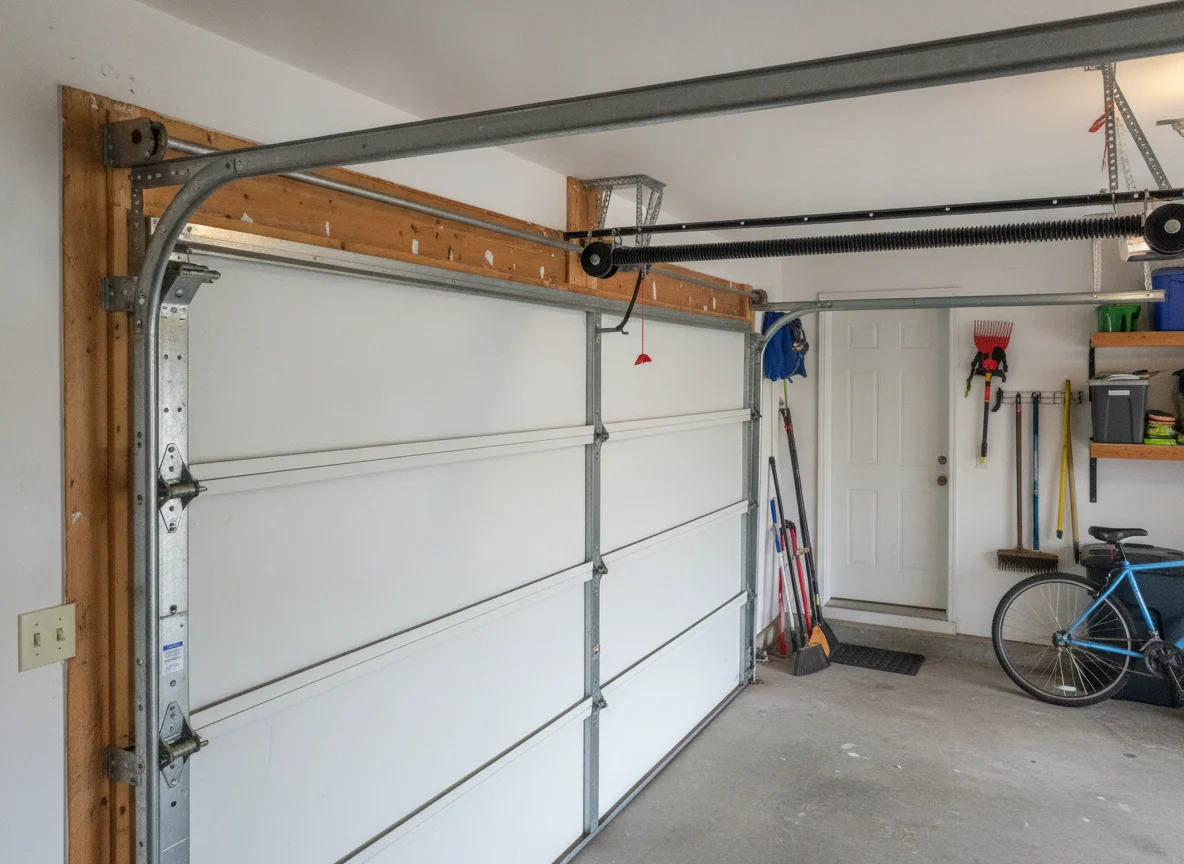
Parts a tune-up looks at
Springs
Examined for coil gaps, stretching, rust and uneven wear, then balance-tested.
Cables
Inspected for frayed strands and rust, mainly at the bottom brackets, and for equal tension on each side.
Rollers and hinges
Loose, cracked or worn rollers flagged; hinges and bearings get lubricant.
Track
Rails examined for dents, slack brackets and misalignment, then wiped down.
Fasteners
Bolts on hinges, brackets and track snugged up, since thousands of cycles shake them loose.
The opener
Chain or belt slack, open and close limits, and closing force set correctly.
Safety reversal
On the way down the door has to turn around when the beam is interrupted and when it touches something.
Bottom seal and weatherstripping, looked at for openings that admit rain, drafts and rodents.
You ought to leave knowing what is worn and why, so that fixing it now or just watching it is your own decision.
Is the door louder, rougher or slower lately? Describe the change and we'll go from that.
Contact UsClues it needs a visit
It has grown noisier than before, with grinding, squealing or a thump at the end of the run.
The motion turns jerky, or it slows mid-travel.
It slams down, or one bottom corner hits the floor first.
The motor seems to strain more than it once did.
No one can say when it was last inspected, and the door gets used every day.
Say what the door is doing
A short description gets things moving, and you needn't know the name of any failed part.
Checks you can do yourself
These quick checks spot trouble before it grows:
Inspect the springs and cables monthly from floor level with the door shut. Watch for breaks in the coils and frayed strands, and keep your hands off both.
Try the auto-reverse
Lay a board or paper towels flat under the door and close it. Openers made in 1993 or later must reverse on contact, per the U.S. Consumer Product Safety Commission. If yours doesn't, stop using it.
Try the eye beam
Pass a broom handle through the beam as the door lowers; it should halt and rise again.
Lubricate the correct parts
Hinges, roller bearings and springs take a spray made for garage doors. Tracks stay clean and dry, and heavy grease is out, because it holds onto grit and dust.
Keep the tracks and the floor under the door clear. With about 17 inches of rain a year, mostly November to March, check that the bottom seal hasn't stuck to wet concrete; forcing the opener against it can tear it.
Frequency
Use decides the answer. A door that serves as the household's main entrance, cycling many times daily, needs more attention than one that rarely moves. January lows here average about 42 degrees F, so cold snaps are not the trigger; pick a time before the rainy months instead.
A yearly visit suits most households, with more often for a door that works harder.
What shapes maintenance cost
One-car or two-car door, plus whether an opener needs attention too.
Worn parts discovered on the day: rollers, the bottom seal, hinges or a cable close to failing. Ask for each to be quoted apart from the tune-up so the decision stays with you.
How much the door has slipped out of adjustment
Years of neglect mean more time to set things right than a door that gets regular checks.
When maintenance isn't the answer
A tune-up fits a door that still works. When a part has already given out, go to the matching repair instead:
Questions people ask
Does a newer door still need a tune-up?
Yes, when it works hard. Cycles rather than years wear out springs and rollers, so a busy door can age them faster than its date suggests.
Will servicing prevent a spring from snapping?
No spring lasts indefinitely. A check can reveal one near the end of its life, so it gets swapped at a time you choose rather than the day it breaks, and that is the whole benefit.
Which lubricant is right?
A garage-door spray, either lithium or silicone based. Household oil and thick grease are the wrong choice.
Other jobs we take on
Garage Door Spring Repair
Torsion or extension springs that failed, changed for ones rated to your door's weight.
Read more →Garage Door Cable Repair
Lift cables that fray, break or jump off, plus doors that hang uneven.
Read more →Garage Door Opener Repair
Openers that growl, reverse or stay silent, plus a new unit when mending isn't sensible.
Read more →Contact us
Mention the age of the door and opener, how often the door runs, and any new habit such as a noise, a jerk or a slow close.
If the house is newly yours, say that too. Before booking any work, look the contractor up with the California Contractors State License Board.